Policy Drives Innovation: How Gwangju Is Bringing AI into Everyday Life
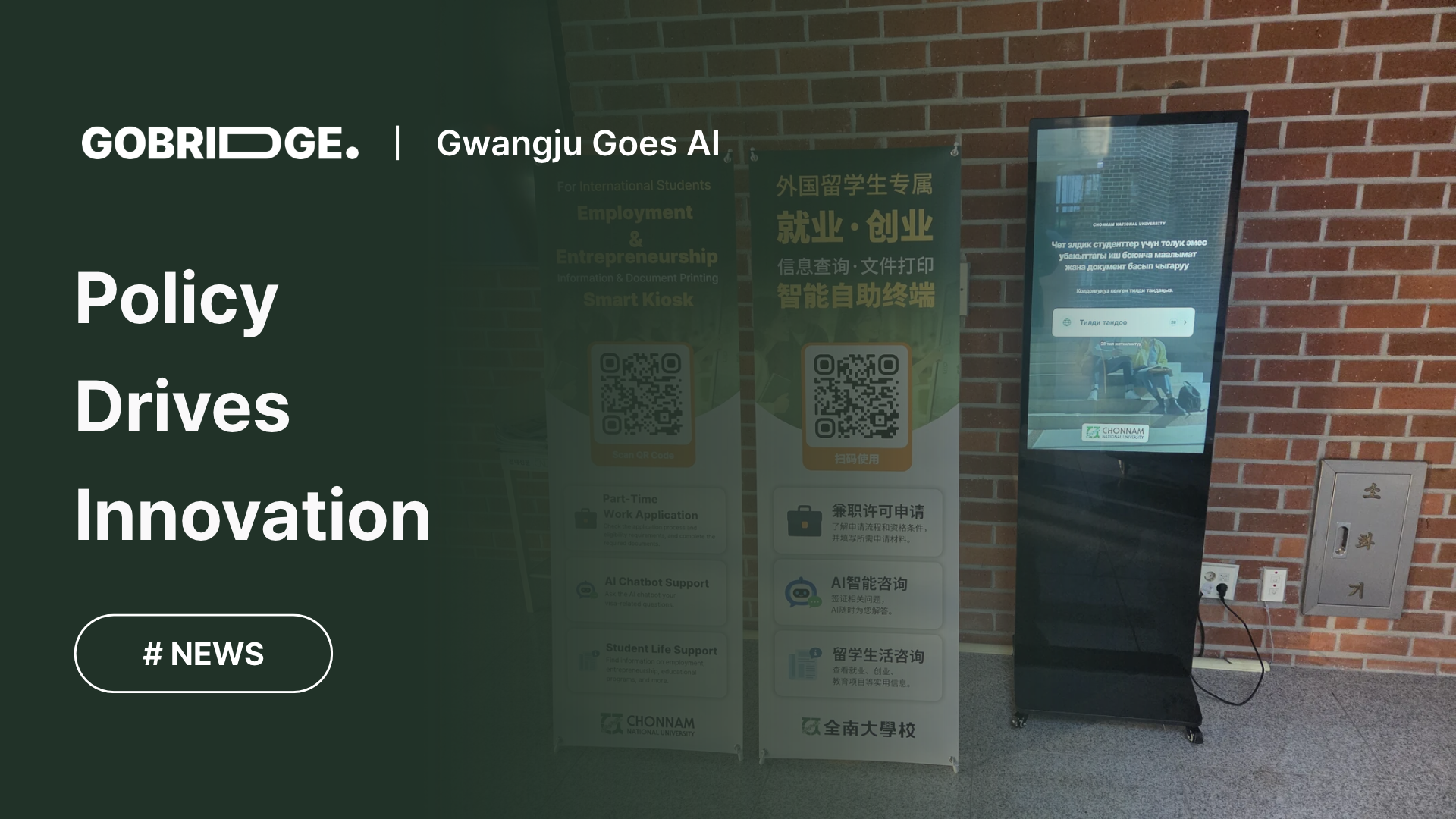
For many foreigners in South Korea, dealing with immigration and administrative procedures can feel like a test of patience. From figuring o
For many foreigners in South Korea, dealing with immigration and administrative procedures can feel like a test of patience. From figuring out which documents to submit to understanding unfamiliar regulations, even a straightforward question can turn into hours of searching, translating, and second-guessing. And when official information is scattered across different websites, finding the right answer can sometimes feel harder than the application itself.
But what if getting help with your visa or residency questions were as simple as having a conversation?
That is the idea behind Hello Friends, one of five AI companies partnering with Gwangju Metropolitan City to bring artificial intelligence out of the tech lab and into everyday life. The initiative is part of a broader effort by Gwangju to build an AI industrial ecosystem where innovative technologies do more than make headlines; they solve real problems for the people who live there.
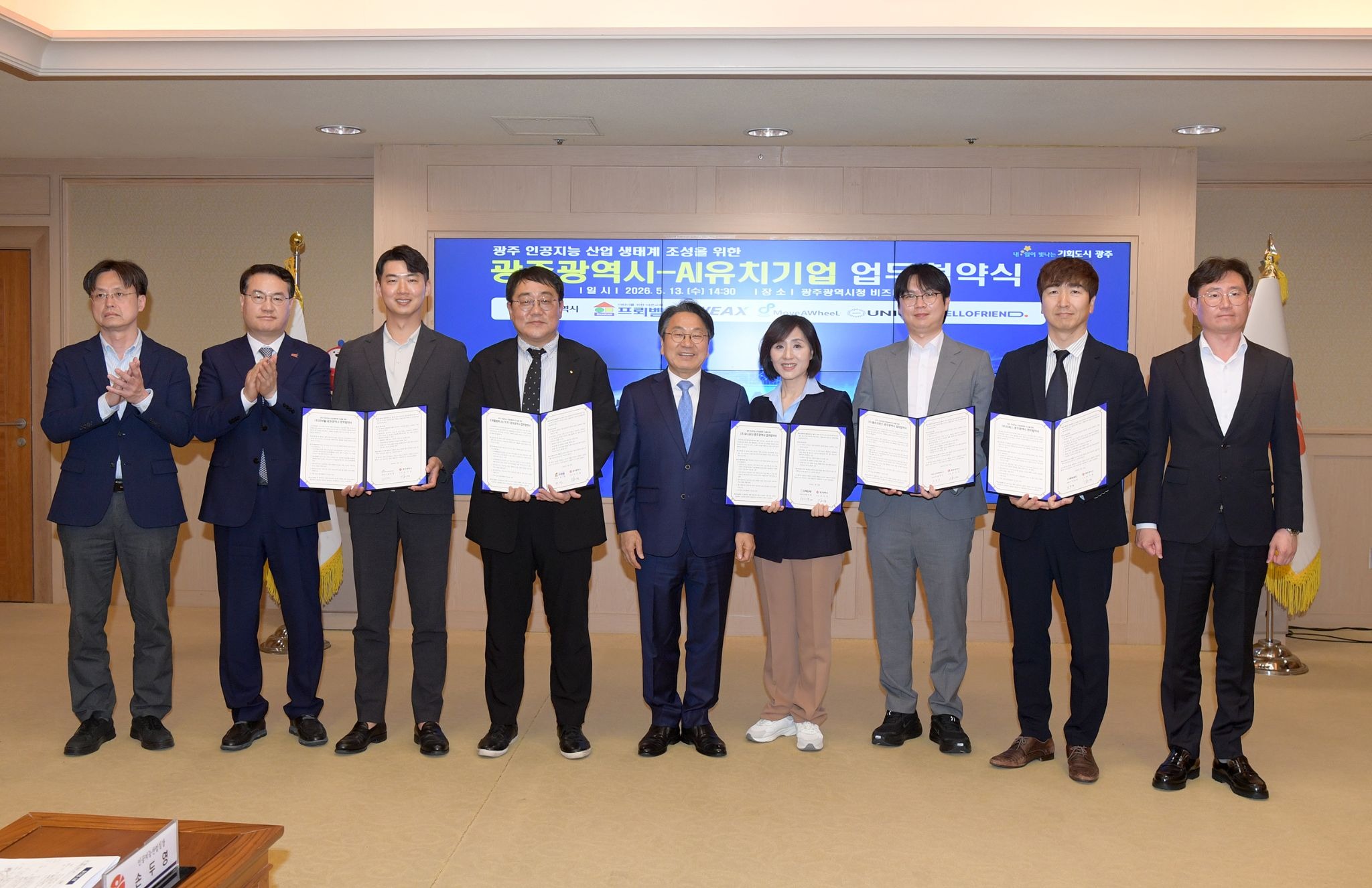
Gwangju Mayor Kang Ki-jung poses with five AI companies after signing an MOU to build Gwangju’s AI ecosystem. Photo: Gwangju Metropolitan City
Making Administrative Services More Accessible
On the 13th, Gwangju Metropolitan City signed a memorandum of understanding (MOU) with five AI companies to establish a more practical, citizen-focused AI ecosystem. Among the signatories, Hello Friends is developing an AI-powered chatbot designed to provide foreigners with information about visas, residency, and administrative procedures.
The concept addresses a familiar challenge for international residents: navigating a system that can be difficult to understand, particularly when language barriers and complicated regulations enter the picture.
Using Retrieval-Augmented Generation (RAG), an AI technology that combines language models with relevant information sources, Hello Friends aims to make administrative information easier to access through conversational interactions. Instead of having to navigate multiple sources to find answers, users can engage with an AI chatbot to seek guidance on the questions that matter to them.
As South Korea continues to welcome international residents, accessible and reliable administrative information is becoming increasingly important. AI-powered assistance offers an opportunity to make that information easier to navigate, helping foreigners better understand the procedures they encounter while living in the country. Hello Friends plans to take this initiative further by promoting a pilot project for an AI-based foreigner counselling chatbot in cooperation with foreigner support agencies and universities in the Gwangju region.
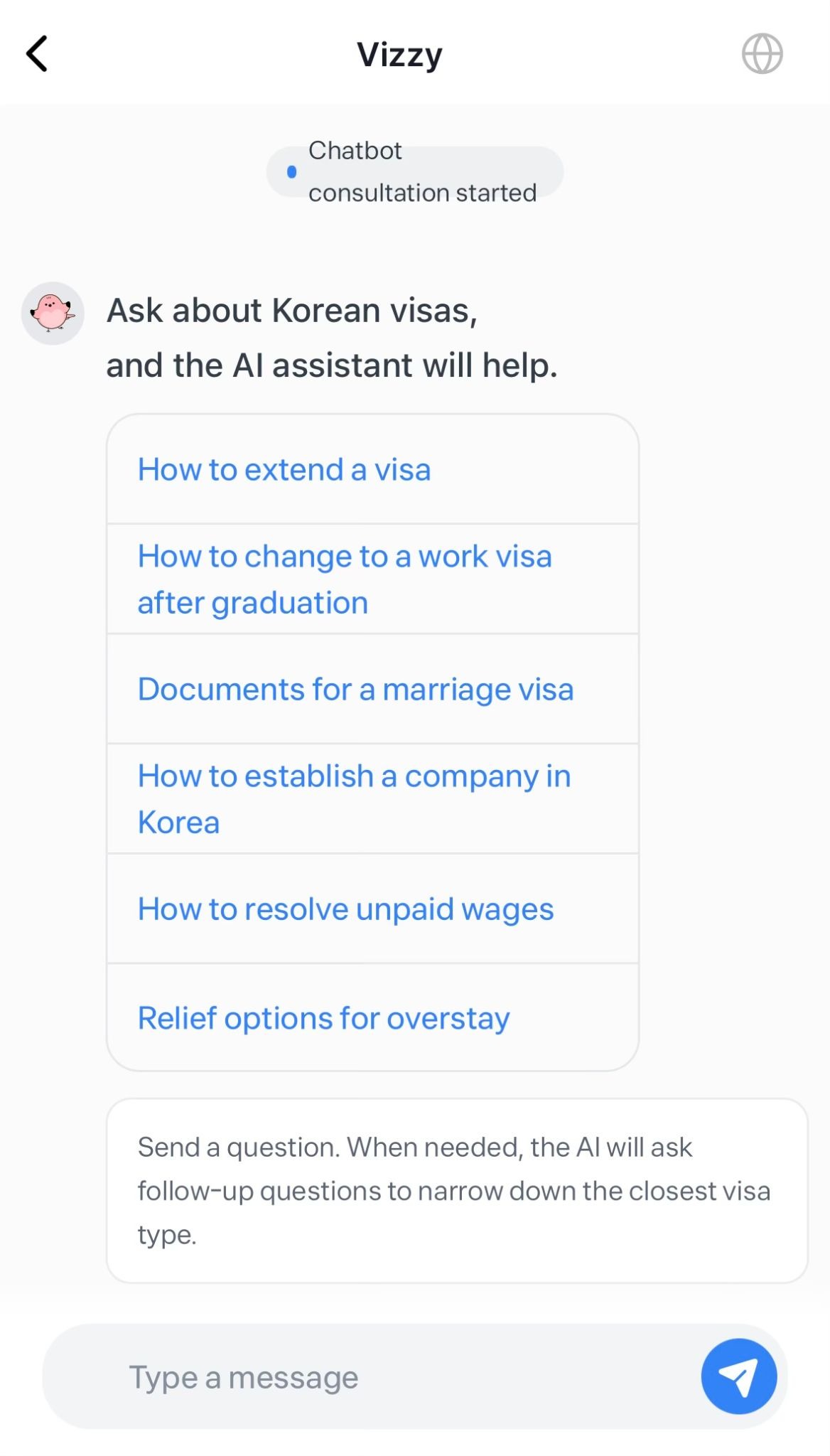
Hello Friends’ AI-powered chatbot for foreign residents in Korea.
Gwangju's Approach: AI That People Can Actually Experience
What makes this partnership particularly interesting is Gwangju's emphasis on practical demonstrations rather than simply attracting technology companies to the city. The idea is straightforward: innovative technologies become more valuable when people can experience their benefits firsthand. Rather than treating AI as an abstract future industry, Gwangju is working to introduce it into public infrastructure and services that residents encounter in their daily lives. As Mayor Kang Ki-jung emphasized, AI is directly linked to citizens’ quality of life, with the potential to improve everyday experiences.
Innovation doesn't happen in a vacuum. Policy is what drives innovation. By creating the right conditions for companies to experiment, collaborate, and turn promising technologies into real-world solutions. Gwangju's approach demonstrates how local governments can move beyond simply attracting AI companies to actively supporting the development and testing of technologies that improve everyday life.
Under the agreement, the city plans to support participating companies through technology demonstrations, commercialization opportunities, administrative assistance, and collaborative networks. This approach creates opportunities for businesses to test their solutions in real-world environments while helping the city identify technologies that can address local needs.
For AI startups and technology companies, such an environment can be particularly valuable. Developing an innovative product is one thing; demonstrating that it works in practice, understanding how people use it, and finding pathways to commercialization are entirely different challenges. Cooperation with local governments can help bridge that gap. Gwangju is building this approach around its National AI Data Center and AI Cluster, with the ambition of strengthening its position as one of South Korea's major AI innovation hubs. With the latest agreement, the number of AI companies and institutions partnering with the city has reached 370.
Five Companies, Five Ways to Put AI to Work
Hello Friends is not alone in this effort. The other four participating companies are applying AI to challenges ranging from early childhood education to road safety and public welfare.
Froebel Happiness Sharing is combining generative AI with nearly five decades of educational content expertise to develop digital learning services for young children. Building on its recent AI education experience booth at Gwangju City Hall, the company aims to expand personalized digital learning opportunities for local children.
D:Works is developing AI-powered tools for document creation, data analysis, and business automation. Its work also focuses on healthcare and biotechnology, with plans to participate in public-sector demonstrations and professional workforce training.
Mobawheel is tackling a rather different problem: dangerous roads. Its sound-wave-based AI sensors detect hazards such as black ice, flooding, and potholes, helping identify potentially dangerous conditions in real time and support timely responses.
Meanwhile, Uniuni is developing a non-video AI safety solution that uses sensors to detect falls and abnormal behaviour without recording video. Its technology is intended for public facilities, including public restrooms and welfare centres, where safety and privacy must go hand in hand.
Together, these companies illustrate how AI can serve very different needs while contributing to a shared vision: technology that makes everyday environments safer, services more accessible, and public systems more responsive.
Building an AI City Around People
For Gwangju, the next step is not simply to become a city where AI companies operate. It is to create an environment where those companies can develop, demonstrate, and commercialize solutions that people can actually use.
For Hello Friends, the partnership offers an opportunity to explore how conversational AI can help address the administrative challenges faced by foreign residents. For Gwangju, it represents another step towards connecting technological innovation with the needs of an increasingly diverse population.
The real measure of an AI ecosystem is not just how many companies it attracts or how advanced its technologies become. It is whether those innovations make a meaningful difference in people's lives.
And if asking a question about your visa or residency eventually becomes a little less stressful, that would be a pretty practical place to start. Got a question? Why not ask the chatbot right away? Give it a try here.
Sources
Article by Ahmad Bin Aamir