South Korea's AI Government Strategy: What Could It Mean for the Public?
From AI government strategy to local GovTech innovation, discover how Korea is transforming public services.
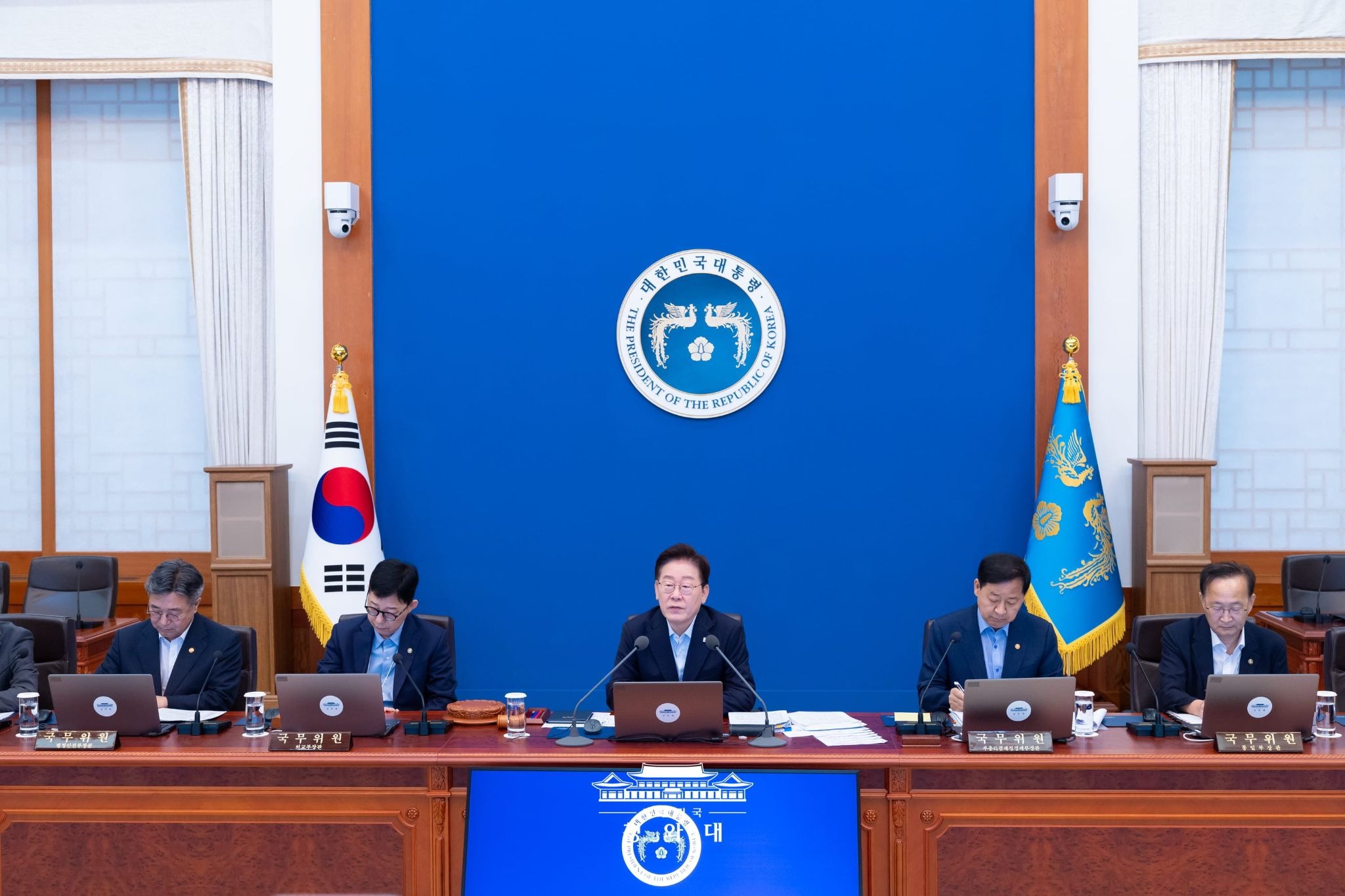
President Lee Jae Myung chairs a Cabinet meeting on Korea's AI government strategy at Cheong Wa Dae on Aug. 25. (Cheong Wa Dae)
Imagine asking a government service a question late at night and receiving an answer without waiting for office hours. Or getting a notification about a public benefit you may qualify for, instead of discovering it months later. What if accessing government services became as simple as asking an AI assistant?
This is the kind of future South Korea wants to build.
In August 2026, South Korea's Ministry of the Interior and Safety (MOIS) announced a strategy to create a world-leading AI-powered democratic government. The initiative aims to use artificial intelligence (AI) to improve public services, strengthen communication between citizens and government, and make public institutions more efficient [1].
But this transformation is not limited to national-level policy. Local governments and technology companies are also exploring practical applications. One example is Ansan City's collaboration with Hello Friends to develop AI-powered administrative services for foreign residents [2].
So, what could this mean for citizens, international students, foreign residents, and public institutions?
1. Government services that work around the clock
A key goal is making government information easier to access.
The government's plans include AI consultation services across five key areas: welfare, public safety, taxes, agriculture, and food and drug safety. These services aim to provide assistance 24 hours a day, allowing people to seek information outside regular office hours [1].
The government also plans to integrate services such as Government24, the National Secretary service, and Benefit Alert into a more personalised AI National Secretary service.
A similar direction can be seen in Ansan. In August 2026, Ansan City announced a GovTech collaboration with Hello Friends to develop and demonstrate an AI-powered administrative service for foreign residents. The project uses Retrieval-Augmented Generation (RAG) technology, drawing on more than 100,000 foreign-resident consultation records to provide relevant administrative information through a multilingual chatbot and kiosk [2].
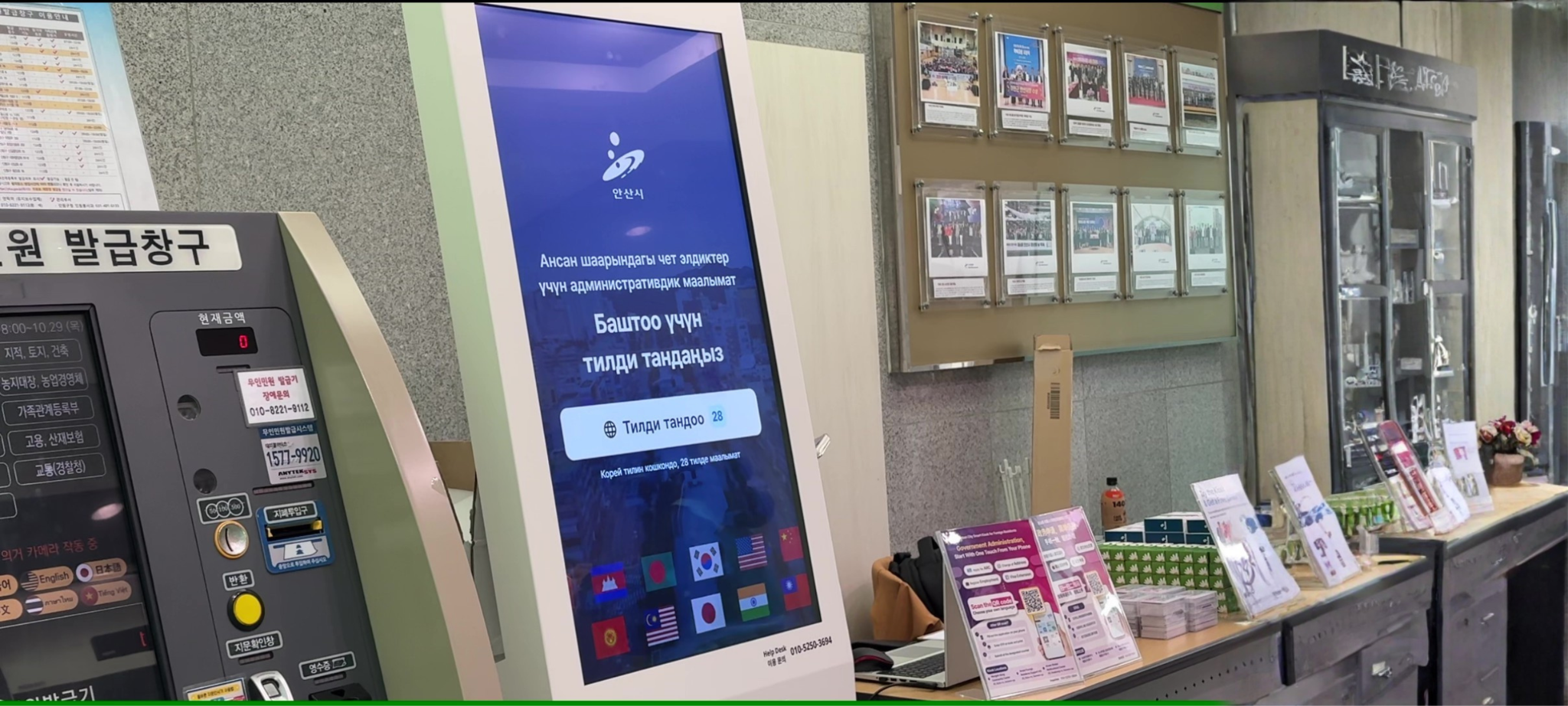
KIOSK operational in Ansan Immigration Center
2. What could it mean for international students and foreign residents?
For foreign residents, navigating Korean public administration can be challenging, particularly when understanding visa conditions, locating government offices, or interpreting official notices.
The Ansan–Hello Friends project directly addresses some of these challenges. Its planned chatbot and kiosk services are designed to support 28 languages, helping foreign residents access administrative information without facing the same language barriers [2].
Hello Friends' broader approach, presented through GoBridge Global, also demonstrates how AI kiosks can provide accessible information about migrant workers' rights, employment conditions, and administrative procedures. The platform highlights multilingual voice guidance, anonymous access, and 24/7 availability as key features [3].
For example, a foreign resident could use the kiosk to find information about changing their address, locating relevant government offices, or exploring available educational programmes in their native language.
As Korea's international population grows, AI-powered services could make public information more accessible. However, they should complement, rather than replace, official support channels.
3. From reacting to problems to anticipating public needs
Traditional government services often require people to search for information, identify relevant programmes, and submit applications themselves. South Korea's proposed AI-powered personal assistant aims to make this process more proactive and personalised.
By connecting services such as Government24 and Benefit Alert, the assistant is intended to help individuals identify public benefits and government services relevant to their circumstances [1].

Image generated using ChatGPT
The Ansan project offers another perspective. By using existing consultation records and RAG technology, its AI system aims to provide responses based on relevant administrative information rather than relying entirely on generic answers [2].
Effective personalisation, however, requires reliable data, appropriate information-sharing, and strong privacy safeguards.
4. Can AI make the government more efficient?
AI is not intended only for public-facing chatbots and kiosks. It can also help government employees organise information, process documents, and handle repetitive administrative tasks.
The OECD's 2025 review recognises Korea's strong digital-government foundations but highlights challenges in data sharing, transparency, and technology adoption [4]. Projects such as the Ansan City–Hello Friends collaboration also demonstrate the importance of cooperation between public institutions and technology companies as part of GovTech.
If routine enquiries can be handled more efficiently, public employees may have more time to focus on complex cases requiring human judgement. Ultimately, success should be measured by whether services become more accessible, reliable, and useful, not simply whether tasks are completed faster.
5. Innovation must come with accountability
Giving AI a larger role in public administration also raises important questions. What happens if an AI system provides incorrect guidance? How can people challenge an unfair decision? Who is responsible if personal information is mishandled?
In October 2026, MOIS announced public-sector AI ethics guidelines centred on six core values, including public interest, fairness, and transparency. The framework includes 68 checklist items and emphasises that final responsibility and control must remain with humans [5].
This is particularly important for initiatives such as Ansan–Hello Friends, where users must be able to verify AI-generated information and access human assistance when necessary.
AI can support public officials, but decisions affecting people's lives should remain accountable and open to appropriate review. The OECD likewise highlights the importance of transparency and oversight in public-sector AI [4].
What comes next?
South Korea's AI government strategy signals a shift towards public administration that is more personalised, proactive, and accessible.
The Ansan City–Hello Friends collaboration provides a practical example of this transformation. By combining AI, multilingual support, and administrative information, the project demonstrates how GovTech innovation can help bridge the gap between government services and the people who need them.
But an effective AI government must do more than introduce new technology. Services must work for people with different languages, abilities, and levels of digital literacy, while preserving access to human assistance. The real test of an AI-powered government is not how intelligent its technology appears, but how much easier, fairer, and more trustworthy it makes people's everyday interactions with the state.
Follow GoBridge for more updates on Korea's policies, technology, and the changes shaping life in the country.
References
[1] Korea.net. “Strategy to Pursue World's Top AI-Driven Democratic Government.” August 2026.
https://www.korea.net/NewsFocus/policies/view?articleId=298486
[2] Ansan City. “Ansan City to Develop AI Administrative Civil Service for Foreign Residents.” August 19, 2026.
[3] GoBridge Global by Hello Friends. “Eliminating Administrative Barriers for Every Foreign Resident.”
[4] OECD. Digital Government Review of Korea: Harnessing Digital and Data to Transform Government. October 29, 2025.
https://www.oecd.org/en/publications/digital-government-review-of-korea_9defc197-en.html
[5] Korea.kr. “Public-Sector AI Ethics Guidelines Established: Final Responsibility and Control Remain with Humans.” October 2026.
https://www.korea.kr/news/policyNewsView.do?call_from=openData&newsId=148972891
Article by Ahmad Bin Aamir