A Smarter Way to Navigate University Administration: Meet CNU's AI Kiosk
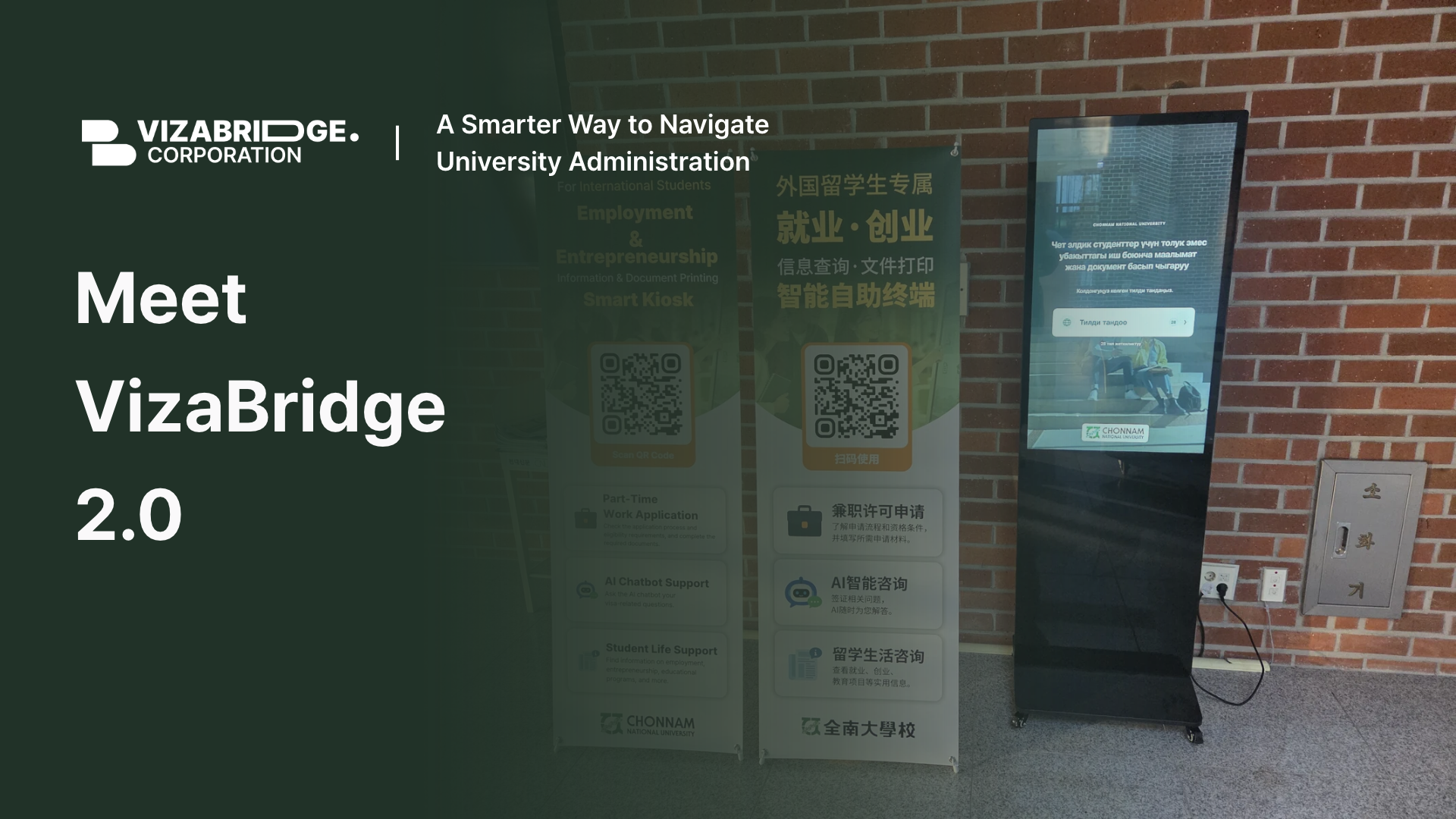
Discover how CNU's AI kiosk is making university administration easier for international students.
Imagine arriving at a university in a new country and needing to complete an immigration procedure. You have to understand the requirements, find the correct forms, coordinate with your employer, and make sure everything is submitted properly. Now imagine being able to access guidance, prepare documents, and print them in one place, in your own language. Sounds unreal? Not anymore.
This is the idea behind VIZZY 2.0, an AI powered administrative support service being piloted at Chonnam National University (CNU) in Gwangju, South Korea. Developed by HelloFriends, the service combines an AI chatbot with a physical kiosk designed to help international students navigate administrative procedures, particularly those related to part time employment permits.
But what exactly does the technology do, and how does it work?
More Than an AI Chatbot
VIZZY 2.0 is not simply a chatbot that answers questions. It is part of a broader administrative support system that connects digital consultation with practical services.
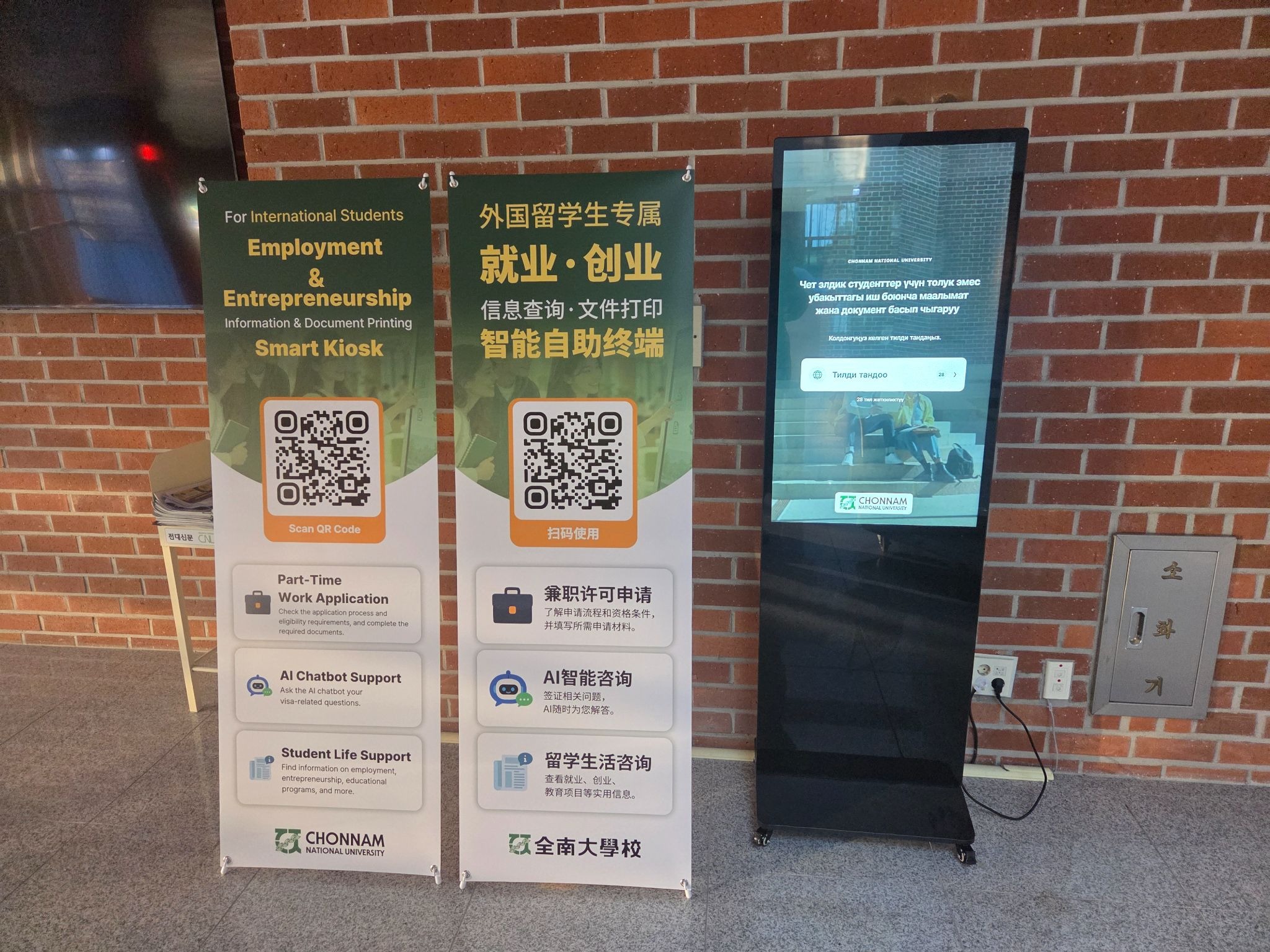
The kiosk serves as the main access point. Students can use its interface to explore university information, check administrative procedures, and access different support functions. The AI chatbot provides an additional consultation channel, allowing students to ask questions through their mobile phones by scanning a QR code.
The service is designed with multilingual accessibility in mind. Its interface includes Korean, English, Simplified Chinese, Vietnamese, Uzbek, Indonesian, and other language options. This allows international students to access important information in a language they are more comfortable using.
The idea is straightforward, making administrative information easier to find and understand, while bringing several related services together in one place.
Connecting the Kiosk with Mobile Services
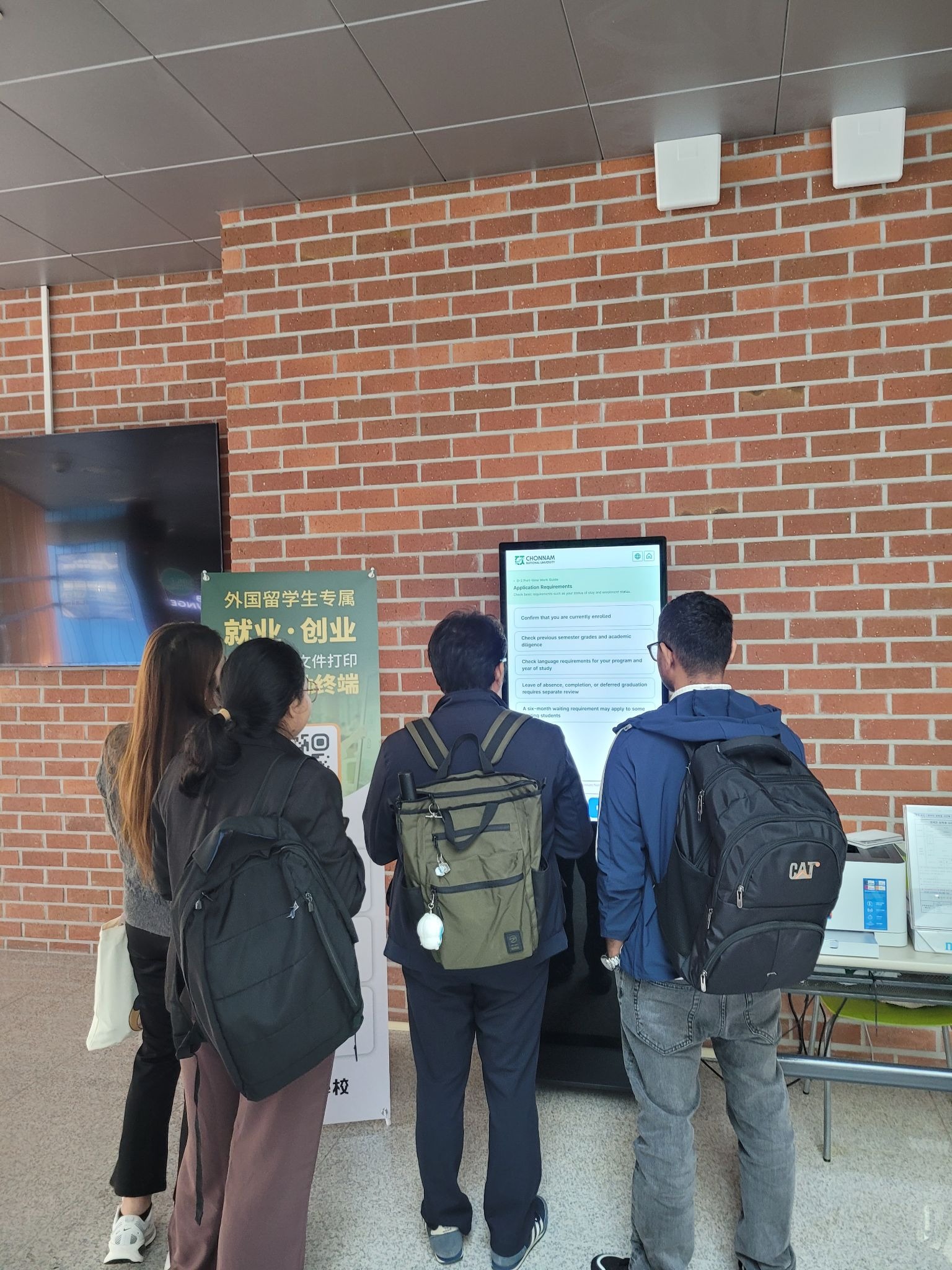
One of the interesting features of VIZZY 2.0 is how it connects the physical kiosk with students' mobile phones.
Rather than requiring users to complete every task directly on the kiosk screen, the system uses QR codes to transfer certain activities to their phones. Students can scan a code, open the relevant service, and continue the process on their own devices.
This approach is particularly useful for longer information and document preparation tasks. For example, students can access university notices, job information, and other content through their phones instead of having to read everything on the kiosk.
The AI chatbot also follows this approach. Students can scan a QR code to access the chatbot on their mobile devices and ask questions about relevant administrative procedures.
In this way, the kiosk acts as a central access point, while mobile devices allow users to continue using the service beyond the physical screen.
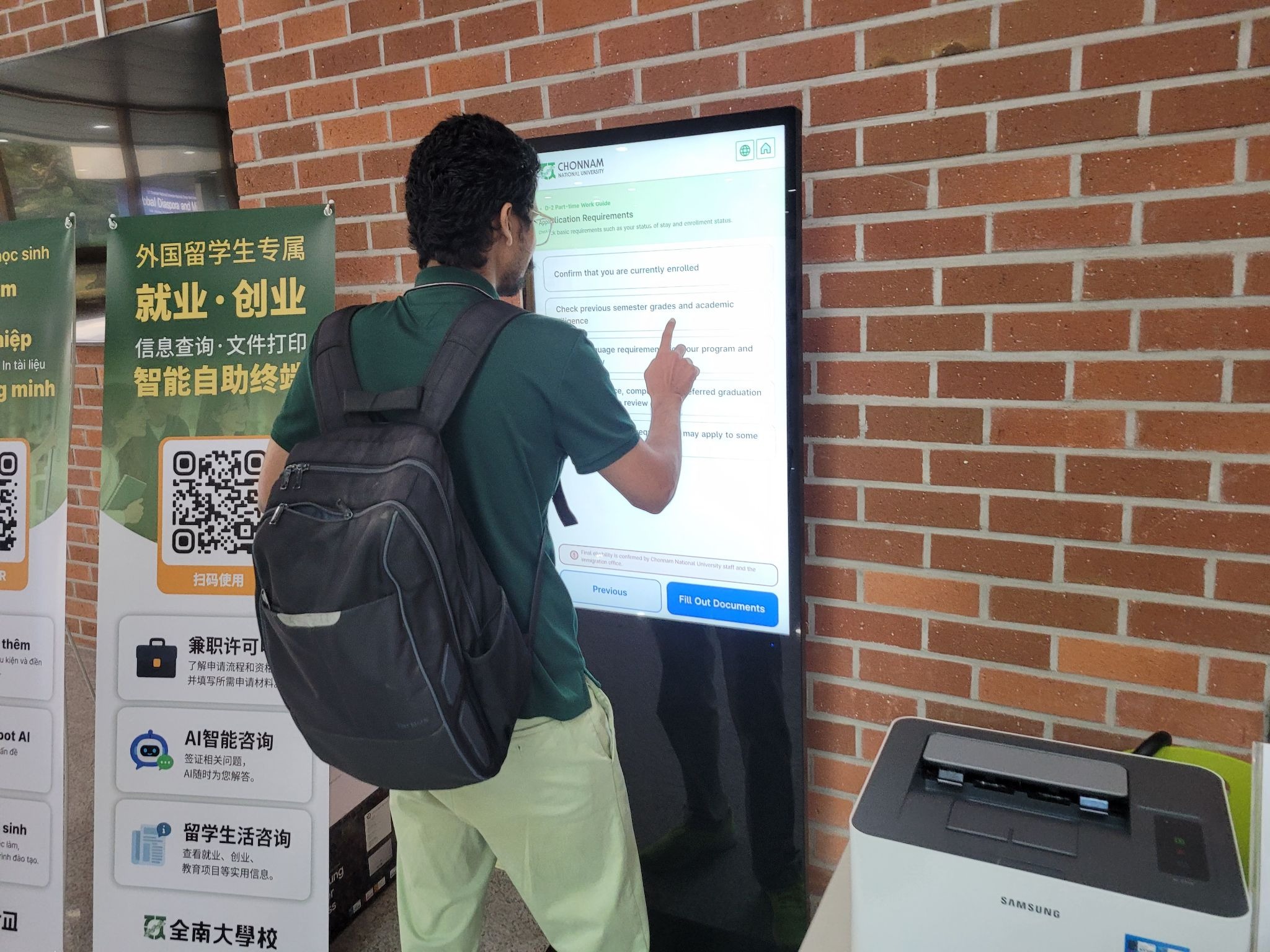
From Filling Out Forms to Printing Documents
Perhaps the most practical feature of the system is its document preparation and printing function.
Part time employment applications can involve several documents that require information from both the student and the employer. VIZZY 2.0 is designed to bring this process together through a mobile based form system connected to the kiosk.
The process has two main steps.
Step 1: Fill out the forms
Students select the form preparation option on the kiosk and scan a QR code with their phones. They first enter their own information. The system then allows them to share a link with their employer, who can complete the relevant sections, including contact details and working conditions.
Step 2: Print the forms
Once the information has been completed, students return to the kiosk and select the printing option. They enter a six digit one time password (OTP) to retrieve their completed documents. After reviewing the information and previewing the forms, they can print the documents together at the kiosk.
The system is designed to prepare four documents:
- Integrated Application Form
- Part time Employment Confirmation Form
- Standard Labour Contract
- Requirement Compliance Confirmation
By connecting mobile form completion with on site printing, the system aims to reduce repeated manual entry and make document preparation more convenient.
One Kiosk, Multiple Information Services
Beyond chatbot consultation and document printing, the kiosk is designed to provide access to several other university services.
These include:
- Part time Work A to Z: A step by step explanation of the application procedure.
- Eligibility Information: Guidance on requirements based on visa status and other relevant conditions.
- University Notices: Announcements from the Office of International Affairs and information about campus events.
- Education Programmes: Information about educational and cultural activities.
- Job Information: Employment opportunities open to international students.
- Frequently Asked Questions: Answers to common questions about matters such as on campus work and changes of workplace.
- Contact Information: Details of the relevant university offices and support channels.
Bringing these functions together means that students can use one service to find information, understand procedures, and access relevant support.
Putting the Technology into Practice
VIZZY 2.0 is currently being piloted at the G&R Hub of Chonnam National University, where the kiosk is installed in the first floor lobby. The pilot runs from October 2026 to January 2027 and is intended to serve approximately 1,000 international students.
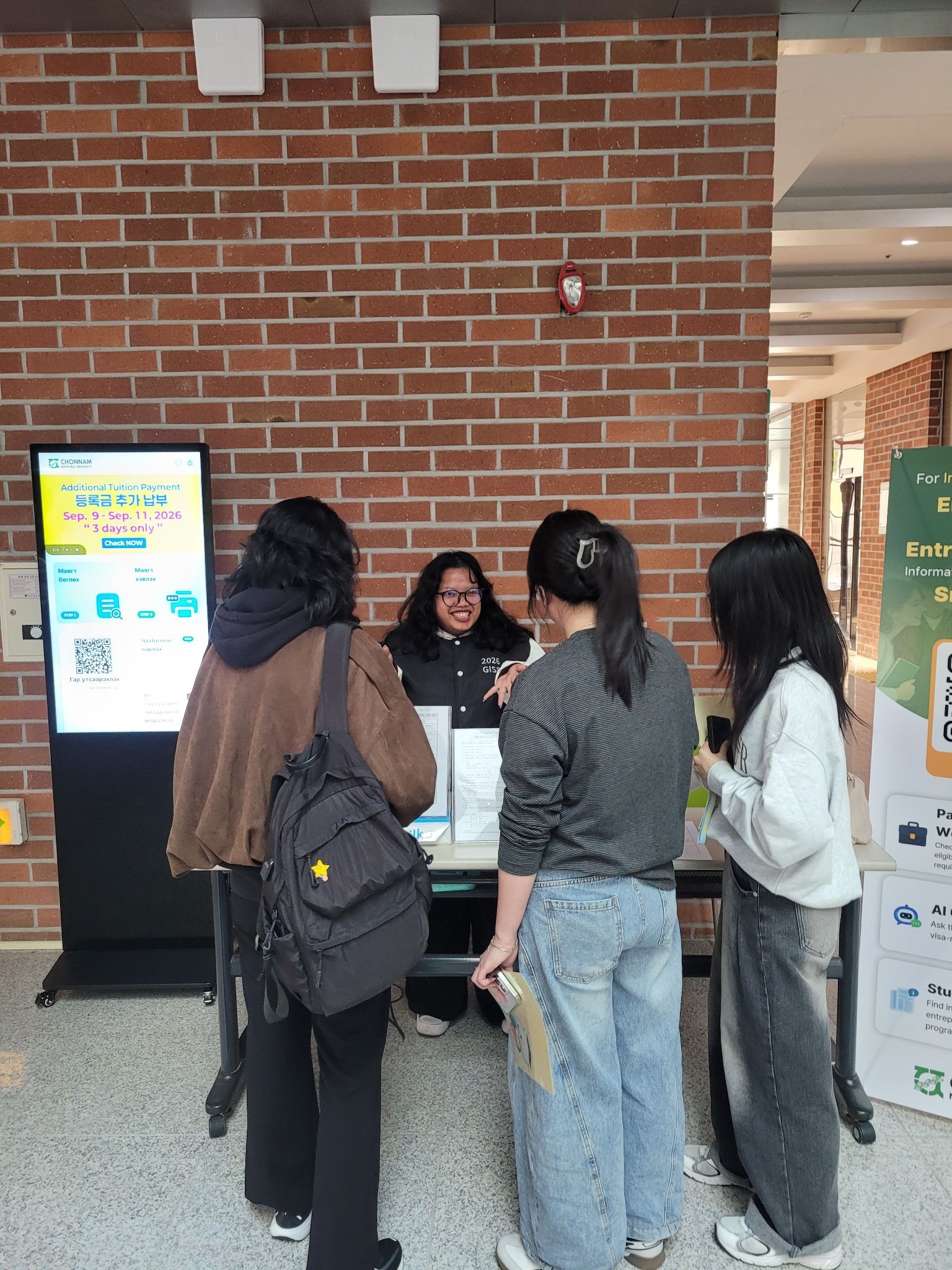
The project also aims to examine how accessible, convenient, and accurate the service is in an actual university environment. Feedback collected during the pilot will help HelloFriends identify areas for improvement and further develop the system.
An important distinction is that AI guidance does not replace official administrative decisions. For example, the chatbot can provide information about part time employment procedures, but the final permit decision remains with the relevant immigration authorities. The kiosk itself also displays a disclaimer explaining that AI responses may differ from actual permit decisions.
VIZZY 2.0 illustrates how AI services can move beyond answering questions. By connecting multilingual information, mobile access, document preparation, and physical printing, it brings several parts of an administrative process into one service.
For universities supporting international students, this offers an interesting example of how technology can help make everyday administrative procedures more accessible.
Keep reading the GoBridge blog for more insights into how technology is changing the way universities support international students in Korea.
Article by Ahmad Bin Aamir