From Arrival to Everyday Life: How an AI Kiosk Could Help International Students in Korea
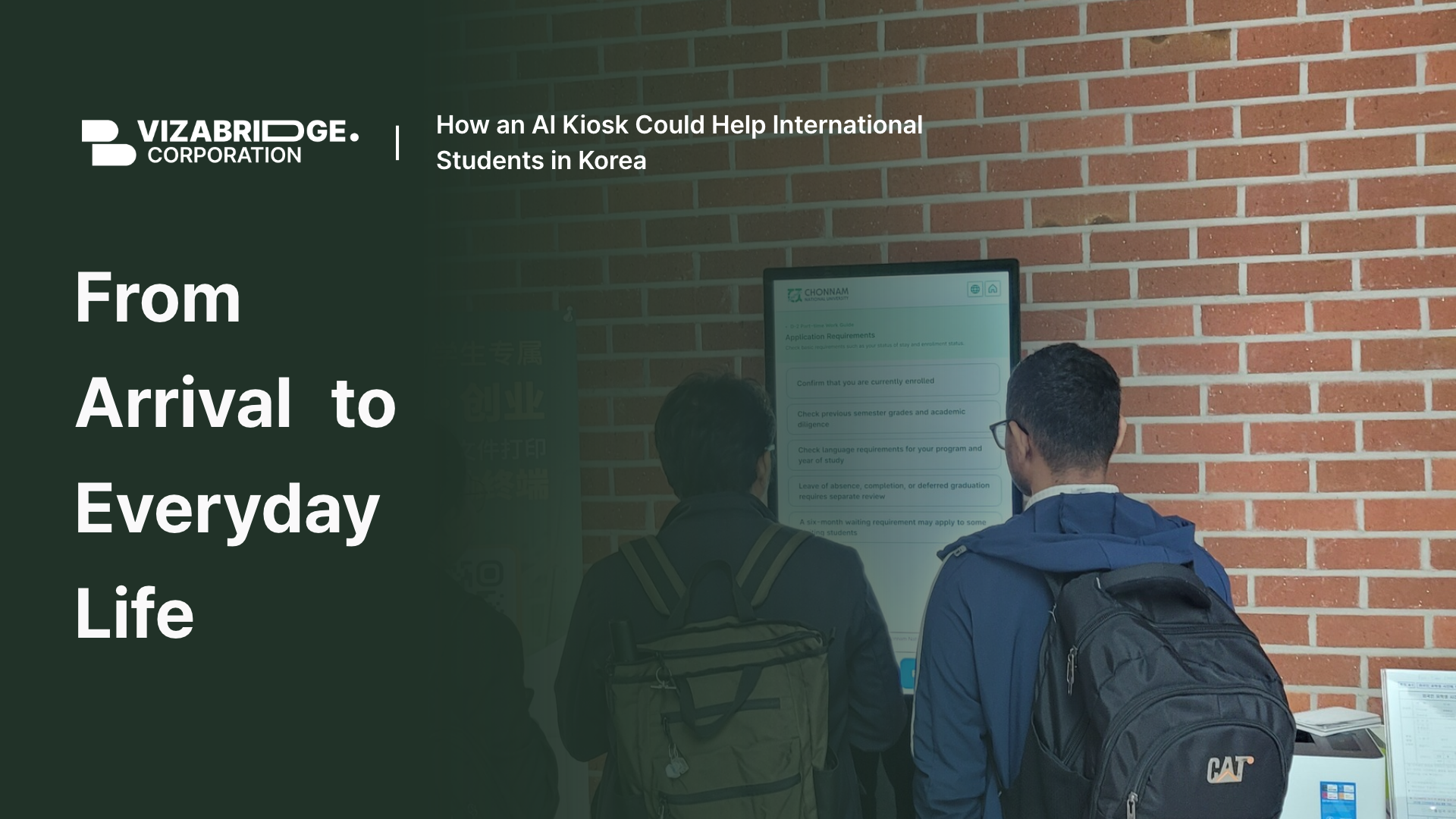
From language barriers to administrative paperwork, discover how CNU's AI kiosk could make life easier for international students in Korea.
Coming to South Korea as an international student looks glamorous on social media. Beautiful campuses, Korean food, city life, K dramas, and new experiences make studying here look like a dream. But what social media rarely shows is what happens when you actually arrive.
I still remember how challenging it can be to navigate a new country. From landing at Incheon International Airport to figuring out which bus to take, reaching your city, and finally finding your university, even simple tasks can become complicated. You look around for directions, try to understand the signs, and search for someone who speaks English. But most of the time, everything is in Korean.
And the challenges do not end once you reach the university.
The Reality of Being an International Student
Universities generally provide some information in English, which certainly helps. However, understanding documentation, completing administrative procedures, and figuring out the rules and regulations can still be difficult.
Need to apply for a part time work permit? You have to understand the requirements, find the correct forms, coordinate with your employer, and make sure you follow the right procedure. Looking for information about an educational programme or a university announcement? You might have to navigate several different websites and pages.
So, what do most international students do?
They ask their seniors.
This is something quite common in international student communities. When you do not understand a procedure, you approach someone who has already gone through it. They explain what documents you need, where to go, and what steps to follow. Sometimes they even share old forms or screenshots to help you out.
But here is the interesting part. Those seniors once relied on their seniors too. Information gets passed from one student to another, sometimes becoming outdated or incomplete along the way.
Wouldn't it be easier if students could access all this information in one place?
Imagine Having Everything in One Place
Imagine walking into your university and finding a kiosk that provides administrative information in your own language. Instead of asking several people where to find a particular form or how to complete a procedure, you could simply access the information through one platform.
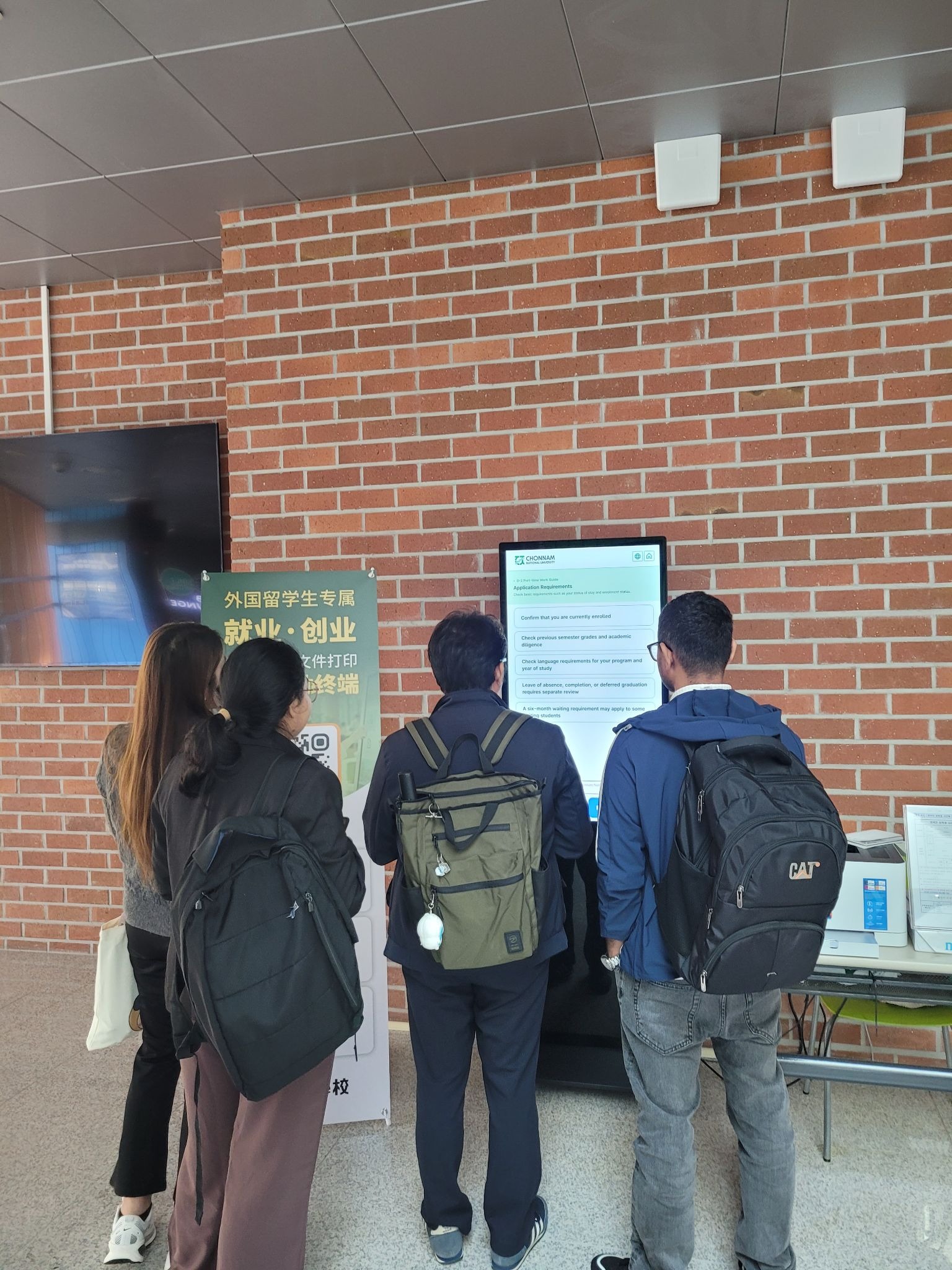
This is the idea behind the AI administrative support kiosk being piloted at Chonnam National University (CNU) in Gwangju.
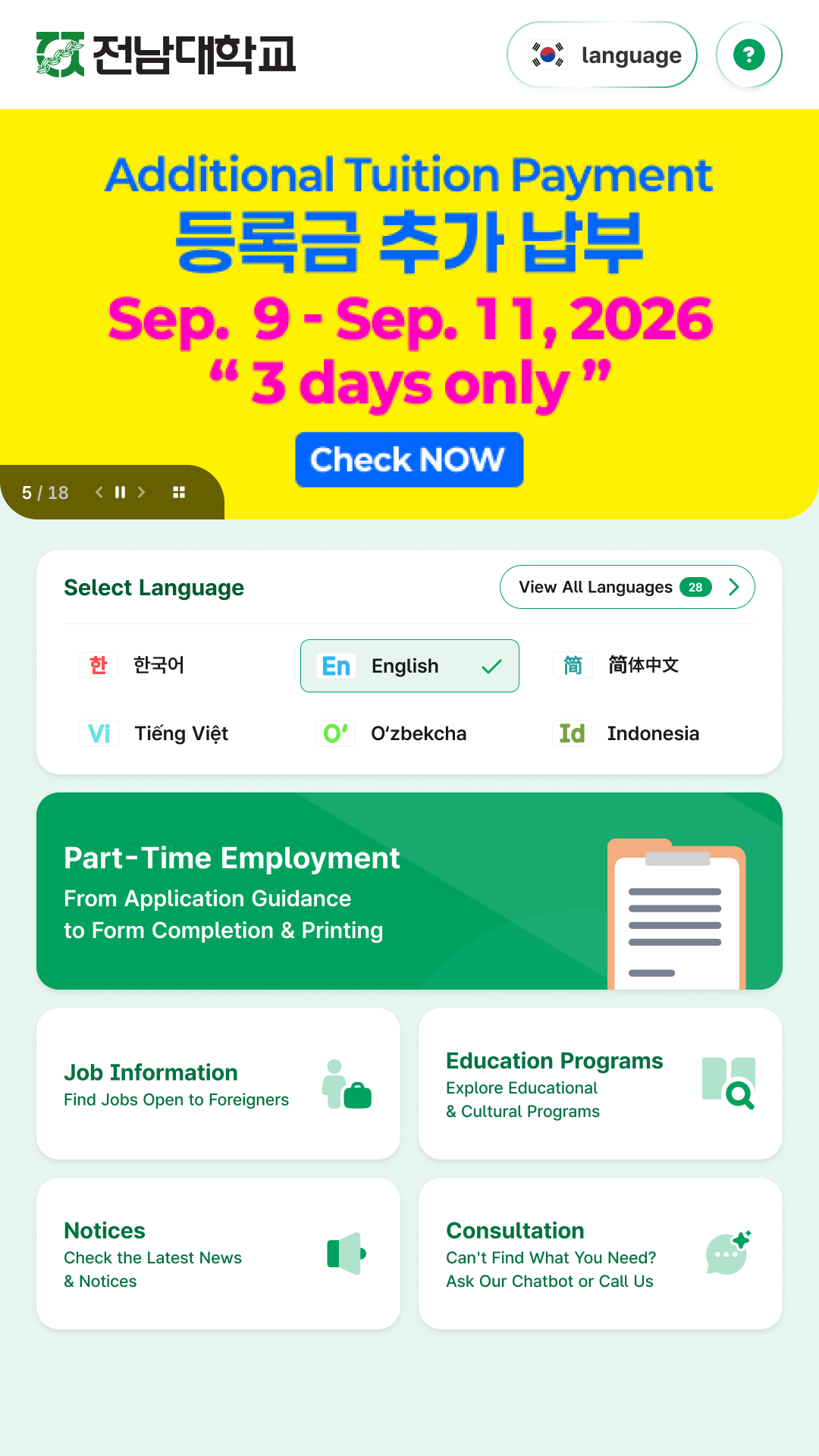
Developed by HelloFriends, the kiosk brings together multilingual administrative information, AI chatbot consultation, document preparation, and printing services. Its main focus is to help international students understand and navigate residence related procedures, particularly part time employment permits.
The interface is designed to support several languages, including Korean, English, Simplified Chinese, Vietnamese, Uzbek, and Indonesian. This means students can access important information without having to rely entirely on their Korean language skills.
From Understanding the Rules to Getting the Documents Ready
One of the most useful features is the information provided about part time employment.
For international students, working part time can be an important way to gain experience and support their living expenses. However, students must understand the relevant requirements and obtain the necessary permission before starting work.
The kiosk is designed to make this process easier to understand. Through its Part Time Work A to Z section, students can follow the application procedure step by step. They can also check eligibility information, understand relevant requirements, and find answers to frequently asked questions.
But information is only one part of the problem. Preparing the paperwork can be another challenge.
This is where the kiosk becomes particularly interesting.
Students can select the form preparation option, scan a QR code, and complete their information on their mobile phones. They can then share a link with their employer so that the employer can fill in the relevant sections. Once everything is completed, students return to the kiosk, enter a six digit one time password, review their documents, and print them together.
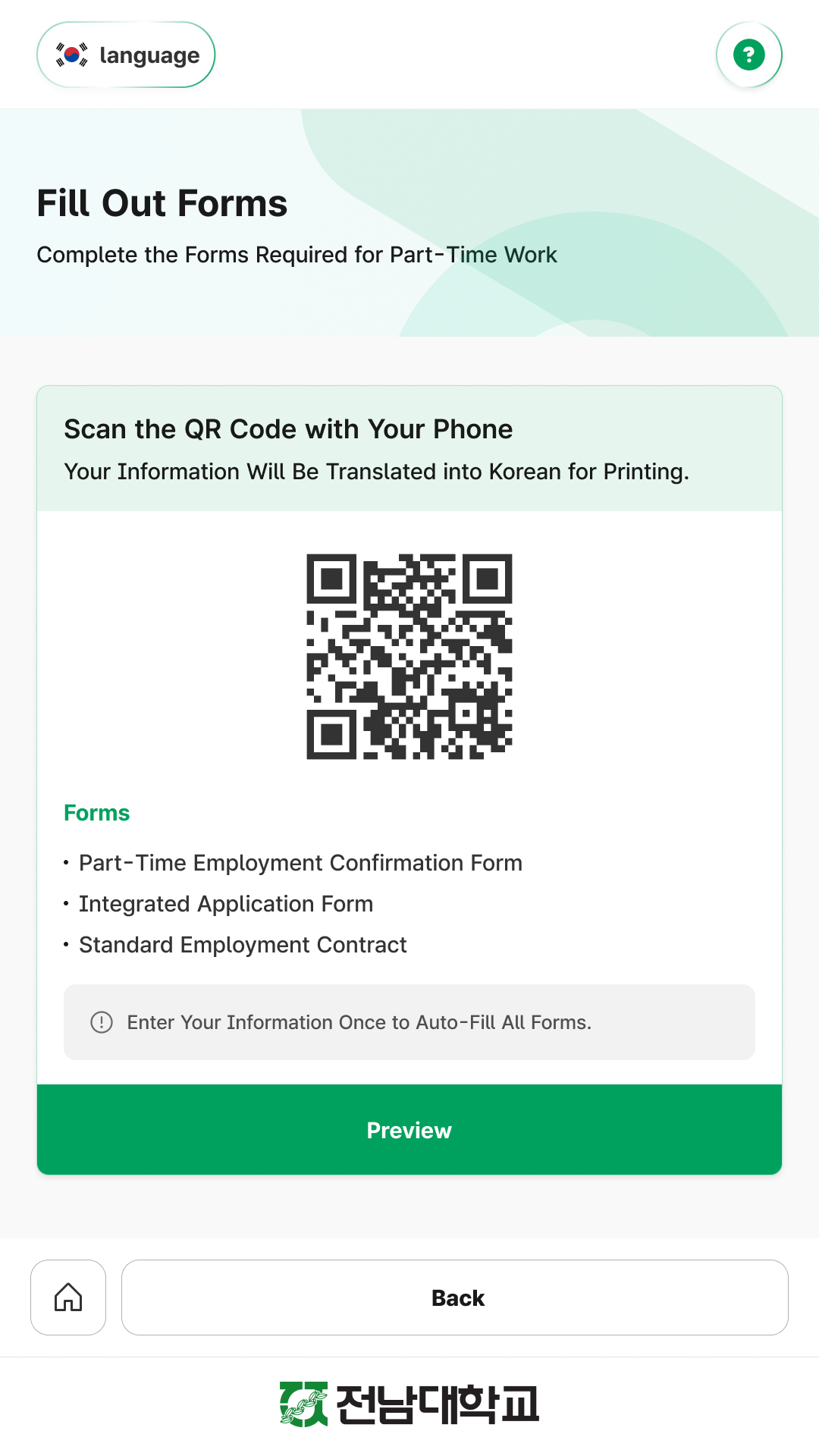
The system is designed to prepare four documents, including the Integrated Application Form, Part Time Employment Confirmation Form, Standard Labour Contract, and Requirement Compliance Confirmation.
Think about it. Instead of repeatedly filling out forms by hand or carrying paperwork between different people, students can complete much of the preparation through their phones and collect the documents at the kiosk.
Of course, the university and immigration authorities still have their respective roles in reviewing documents and making official decisions. The technology is there to help students navigate the process, not replace those authorities.
More Than Just Immigration Information
Another important aspect is that the kiosk is not limited to visa procedures or part time employment.
Students can also access university announcements, educational and cultural programmes, job information, and frequently asked questions. Contact information for relevant university offices is also included.
The AI chatbot adds another layer of support. Students can scan a QR code and access the chatbot on their mobile phones to ask questions about administrative procedures.
For someone who has just arrived in Korea, this kind of support could make a real difference. Sometimes, the biggest challenge is not the procedure itself but knowing where to find the correct information.
Having these services connected through one platform could save students time and make everyday university administration easier to navigate.
A Small Change That Could Make a Big Difference
The kiosk is currently being piloted at the G&R Hub of Chonnam National University, with the demonstration scheduled to run from October 2026 to January 2027. The project is intended to serve approximately 1,000 international students. During this period, the service will be tested in a real university environment, with feedback used to identify areas for improvement.
As someone who has experienced life as an international student in Korea, I understand how much difference clear and accessible information can make. You do not necessarily need someone to do everything for you. Sometimes, you simply need the right guidance, in a language you understand, at the right time.
That is what makes this project interesting. It is not just about introducing another AI chatbot or installing another digital screen on campus. It is about bringing information and practical administrative support closer to the people who need it.
For international students, a smoother university experience does not begin and end with admission. It also depends on how easily they can navigate everyday life after arriving in Korea.
Keep reading the GoBridge blog for more insights into how technology is making Korea more accessible for international students.
Article by Ahmad Bin Aamir